


From treating illness to building lifelong wellness, intelligent health systems and a new architecture of African–global health cooperation
KIGALI, RWANDA — From 30 September to 2 October 2026, Kigali will become a major meeting point for policymakers, health leaders, technology innovators, investors, researchers, development partners and entrepreneurs from Africa and beyond as the Africa HealthTech Summit (AHTS) @5 convenes at the Kigali Convention Centre.

Hon. Dr Sabin Nsanzimana,
Minister of Health, Rwanda
Held under the theme “Wellness for All: Powered by Intelligent Health Systems,” the fifth edition of AHTS comes at a defining moment for Africa’s health systems.
The Summit is no longer positioning digital health merely as a technological upgrade to existing healthcare structures. Its ambition is considerably broader: to rethink how healthcare is designed, delivered, financed and governed, while moving the continent from a predominantly treatment-oriented model towards prevention, lifelong wellness, connected care and people-centred intelligent health systems.
This shift is strategically important. Africa’s health systems are simultaneously facing the growing burden of non-communicable diseases, persistent inequalities in access, rising healthcare costs, fragmented service delivery and rapidly changing technological landscapes.
At the same time, artificial intelligence, health data, digital public infrastructure and connected-care models are creating unprecedented opportunities to redesign the relationship between citizens and health systems. The question confronting Kigali, therefore, is not simply whether Africa should embrace digital health.
The more consequential question is:
Can Africa build intelligent health systems that are equitable, interoperable, financially sustainable and capable of delivering better health outcomes at continental scale?
Kigali: More Than a Host City, a Strategic Demonstration Platform
The choice of Kigali as the host city carries considerable strategic significance.
Rwanda has increasingly positioned digital transformation as an instrument of public-sector reform, innovation and service delivery. In healthcare, the country has invested in digital infrastructure and data-driven approaches that offer an important practical context for the discussions taking place at AHTS.
The National Health Intelligence Center, for example, reflects an emerging approach in which health data from different levels of the health system can be brought together to strengthen surveillance, analysis and evidence-based decision-making.
This gives Kigali a distinctive opportunity.
The city will not merely host conversations about the future of African healthcare. It can provide a living environment in which participants examine how digital systems, data intelligence and technological innovation can be translated into public-health practice.
That distinction matters.
International conferences often succeed in generating declarations, recommendations and partnerships. Their real value, however, is ultimately measured by whether those ideas can be converted into implementation.

H.E. Dr Silvia Paula Valentim
LUTUCUTA
Minister of Health, The Republic of Angola
Kigali has an opportunity to demonstrate precisely that transition: from policy intention to operational reality.
AHTS @5: From Digital Transformation to Intelligent Health Systems
The evolution of AHTS itself illustrates how quickly Africa’s health-tech agenda has matured.
The Summit’s previous editions progressively moved from digitalisation and universal quality care to community health, artificial intelligence, connected care and implementation. The 2026 edition now explicitly advances the conversation towards intelligent health systems and lifelong wellness.
This evolution is significant.
Digitalization alone does not automatically produce better healthcare.
A hospital can have electronic records and still remain disconnected from primary care. A country can develop sophisticated applications while rural communities remain digitally excluded. A health ministry can collect millions of data points without possessing the analytical infrastructure required to transform them into timely decisions.
The next generation of health systems must therefore be connected, interoperable, intelligent and people-centred.
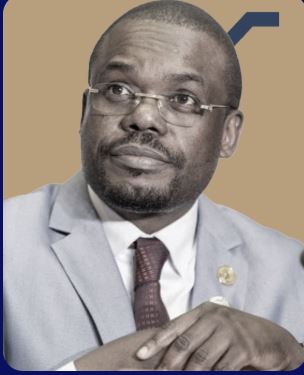
Dr. Kaseya Jean
Director General, Africa CDC
AHTS @5 provides an important platform for addressing that transition.
The Interoperability Challenge: Connecting Africa’s Health Data
One of the most important challenges facing African digital health is fragmentation.
Across the continent, governments, hospitals, NGOs, private companies and technology providers have developed numerous digital platforms. Yet many of these systems were designed independently and do not necessarily communicate with one another.
The result can be a collection of digital islands rather than an integrated health ecosystem.
Interoperability must therefore become a strategic priority.
A patient’s health information should be capable of moving securely and appropriately across different levels of care. Public-health authorities should be able to aggregate relevant information for surveillance and planning. Researchers should be able to work with appropriate datasets while respecting privacy and ethical safeguards.
The challenge is not simply technical.
It involves governance, regulation, cybersecurity, data ownership, sovereignty, institutional coordination and public trust.
AHTS @5 can make an important contribution by bringing African and international stakeholders together around common standards and implementation frameworks.
The ultimate objective should be to ensure that Africa’s health-data revolution does not produce greater fragmentation, but instead creates a connected continental health intelligence architecture.
Artificial Intelligence: Opportunity, Responsibility and African Agency
Artificial intelligence is likely to be one of the defining technologies of the next phase of healthcare transformation.

H.E. Dr Chris Baryomunsi
Minister of Health, Uganda
Its potential applications are extensive: clinical decision support, early diagnosis, disease surveillance, medical imaging, predictive analytics, resource allocation, patient monitoring and digital therapeutics.
Yet technological enthusiasm must be accompanied by strategic caution.
Africa cannot afford to become merely a consumer of artificial intelligence systems designed elsewhere and trained primarily on data that do not adequately represent African populations.
The continent needs to participate in the development, testing, governance and ownership of AI solutions.
This requires investment in African research institutions, universities, technology companies, data infrastructure and specialized human capital. It also requires robust safeguards concerning privacy, algorithmic bias, cybersecurity, informed consent and accountability.
The central question should therefore not be:
“How can Africa adopt AI as quickly as possible?”
It should be:
“How can Africa use AI responsibly to solve African health challenges while retaining agency over its data, knowledge and technological future?”
That is a much more strategic conversation—and Kigali provides an appropriate platform for it.
Wellness for All: A Fundamental Change in the Philosophy of Healthcare
Perhaps the most important contribution of AHTS 2026 lies in its central concept: Wellness for All.
The phrase represents more than a conference slogan.
It signals a fundamental change in how health should be understood.
Traditional healthcare systems often intervene after illness has already developed. Intelligent health systems should increasingly be capable of identifying risk earlier, supporting healthy behaviour, monitoring populations and bringing preventive services closer to citizens.
This is particularly important as Africa confronts a growing burden of chronic diseases. The 2026 programme places emphasis on wellness and preventive care, primary healthcare, sexual and reproductive health and rights, non-communicable diseases and mental health.
The implication is profound:
The hospital of the future should not be the first point at which a health system encounters its citizens.
Communities, homes, schools, workplaces and digital platforms must become part of the preventive-health ecosystem. That means health technology must increasingly move beyond hospitals and into people’s everyday lives.
The Last-Mile Challenge: Ensuring Technology Does Not Deepen Inequality
There is, however, a fundamental risk.
Digital transformation can either reduce inequalities or reproduce them in digital form.
If sophisticated technologies are concentrated in major cities and tertiary hospitals while rural populations lack reliable connectivity, devices or digital literacy, technological progress could inadvertently widen existing health disparities.
For this reason, equity must remain at the centre of intelligent health systems.
A truly successful African health-tech model should work not only for the urban professional with a smartphone, but also for the rural household, the community health worker, the elderly citizen, the young mother and populations living far from specialist medical services.
The question of the “last mile” must therefore become one of the central measures of AHTS’s success. Technology has achieved its purpose only when it improves the life of the person who needs it most.
Financing the Transition: From Innovation to Scale
Another decisive challenge is financing.
Africa does not suffer from a complete absence of health innovation. Across the continent, entrepreneurs and researchers are developing promising technologies and business models.
The problem is often the transition from pilot to scale.
A promising digital-health project may work successfully in one district yet struggle to secure the capital, procurement arrangements, regulatory approvals or institutional partnerships required for national deployment.

This is why AHTS must continue to bring together governments, investors, development partners and innovators. The Summit’s current programme explicitly includes investment and innovation-oriented components, including opportunities designed to connect innovators with capital and markets.
The next generation of African health financing should therefore focus not only on discovering innovations, but on scaling those that demonstrate measurable public-health value.
Africa–Europe Cooperation: From Donor–Recipient Relations to Co-Creation
The transformation of African healthcare also creates an opportunity to redefine international cooperation.
For decades, health cooperation between Africa and Europe and other international partners has often been structured around a donor–recipient paradigm.
That model is increasingly inadequate for the complexity of today’s digital-health environment.
The future requires co-creation, shared leadership, reciprocal investment and mutual learning.
Africa brings enormous demographic scale, urgent health needs, entrepreneurial energy and increasingly sophisticated digital innovation.
Europe and other global partners bring substantial scientific, technological, financial and regulatory expertise.
The strategic opportunity lies in combining these strengths without reproducing unequal relationships.
Health-data exchange, interoperability standards, artificial intelligence governance, research collaboration, cybersecurity and digital public infrastructure could become practical areas for Africa–Europe cooperation.
Kigali can help provide the political and professional space in which such a new partnership architecture is negotiated.
The Societal Impact: What Does Intelligent Health Mean for Ordinary Citizens?
Ultimately, the success of health technology must be measured at the level of human lives. For citizens, intelligent health systems could mean earlier diagnosis, shorter waiting times, better continuity of care, improved access to specialists and stronger disease prevention.
For health professionals, they could provide better information, decision-support tools and more efficient coordination. For governments, integrated health intelligence could strengthen planning, resource allocation and emergency preparedness.
For entrepreneurs and young professionals, the sector could create new opportunities in software development, biomedical innovation, data science, artificial intelligence, research and health services. And for African economies, a stronger health-tech ecosystem could become an important component of the continent’s wider digital economy.
The impact therefore extends well beyond healthcare.
Health innovation can become economic innovation, social innovation and institutional innovation at the same time.
What Rwanda Can Bring to the Table
For Rwanda, hosting AHTS @5 is both an opportunity and a responsibility.
The country can showcase its experience in digital governance, health innovation and data-driven public services. More importantly, it can use the Summit to position Kigali as a platform for African problem-solving rather than merely an attractive venue for international conferences.

Rwanda’s experience with digital health intelligence provides a concrete basis for this positioning.
The country’s National Health Intelligence Center represents an attempt to use integrated health information and advanced analytics to support more timely and evidence-based decision-making.
The broader opportunity is to demonstrate how digital infrastructure can connect the community level with national health intelligence and ultimately support better policy and service delivery.
Kigali should therefore aim to leave participants with a powerful message:
Africa does not need to wait for the future of healthcare to be designed elsewhere. Africa can help design, build and govern that future itself.
The Ultimate Test: What Will Remain After Kigali?
The greatest measure of AHTS @5 will not be the number of delegates who attend.
It will be what happens after they leave.
Will new cross-border partnerships emerge?
Will African innovators gain access to new capital?
Will governments adopt interoperable standards?
Will research collaborations be launched?
Will digital-health solutions move from pilot projects into national systems?
Will citizens actually experience better healthcare?
These are the questions that should define the Summit’s legacy.
The organisers have already positioned AHTS as a platform where governments, innovators, investors, researchers and development partners come together because no single institution can transform healthcare alone. The logical next step is to turn this philosophy into a measurable Kigali HealthTech Legacy Framework—a mechanism for tracking commitments, partnerships, investments, innovations and implementation after the Summit.
Such an approach would transform AHTS from an annual gathering into a long-term continental implementation platform.
Kigali and the Emergence of a New African Health Diplomacy
There is also a broader geopolitical dimension.
Health challenges do not stop at national borders.
Disease outbreaks, medicine supply chains, health-worker mobility, data flows and emergency preparedness increasingly require regional and continental coordination.

Intelligent health systems therefore have the potential to become instruments of African health diplomacy.
By strengthening interoperability and cross-border collaboration, African countries can move from isolated national systems towards more coordinated regional health architectures.
Kigali could play an important role in facilitating this transition.
The Summit can become a place where governments do not merely exchange experiences but establish practical mechanisms for working together.
Conclusion: Kigali Can Help Define Africa’s Health Future
AHTS @5 comes at a critical moment.
Africa stands at the intersection of demographic transformation, technological acceleration, changing disease patterns and growing expectations for equitable access to quality healthcare.
The continent cannot respond to these challenges with yesterday’s models.
It needs systems that are preventive rather than reactive, connected rather than fragmented, intelligent rather than purely administrative, people-centred rather than institution-centred, and scalable rather than confined to isolated pilots.
That is the strategic promise of “Wellness for All: Powered by Intelligent Health Systems.”
For the organizer’s, the challenge is to ensure that AHTS @5 becomes a benchmark for international dialogue and practical implementation.
For Rwanda, the opportunity is to demonstrate that Kigali can serve not only as a host city but as a strategic platform for innovation, investment, cooperation and African leadership in health technology.
For Africa, the opportunity is greater still.
It is the opportunity to move from being a recipient of health technologies to becoming a co-creator, owner and governor of the technologies shaping its health future.
If the commitments made in Kigali translate into investment, interoperable systems, responsible AI, stronger primary healthcare, cross-border cooperation and measurable improvements in people’s lives, then AHTS @5 will have achieved something far more important than another successful international summit.
It will have helped establish a new principle for African healthcare:
The future of health is not simply about treating people when they become ill. It is about building intelligent systems that help people remain healthy, detect risks earlier, access care more equitably and live healthier lives.
And if Kigali succeeds in turning that principle into action, AHTS @5 could be remembered not merely as the fifth edition of a summit, but as a strategic turning point in Africa’s journey from digital health transformation to intelligent, preventive and people-centred healthcare.
The Evolution and Future of AHTS: Building Africa’s Intelligent Healthcare Systems
A Strategic Foundation at the Heart of Innovation (2022)
Founded in 2022 in Kigali, Rwanda, the Africa HealthTech Summit (AHTS) was established to permanently transform Africa’s digital healthcare landscape. Conceived as a results-oriented platform rather than a conventional conference, AHTS was built to break down industry silos by directly connecting biomedical innovators, global investors, and policymakers.
From its inception, the organization has dedicated itself to moving medical innovation from theoretical concepts into concrete clinical workflows at the patient’s bedside.
Key Achievements: 5 Years of Clinical and Institutional Impact
Celebrating its 5th anniversary at the 2026 edition, AHTS has built a solid track record of high-impact partnerships:
- Unprecedented Institutional Access: Through its Ambassador Circle, AHTS has secured direct lines of communication with African Ministries of Health. This is highlighted by Rwandan Health Minister, Dr. Sabin Nsanzimana, who noted: “AHTS is where Africa’s digital health agenda gets cross-checked by the people who have to implement it.”
- Standardization and Interoperability: AHTS has catalyzed cross-sector collaborations to standardize digital health protocols. This initiative streamlines the integration of advanced technologies—such as AI diagnostics and telemedicine—into complex clinical environments.
- Optimized Care Delivery: By mobilizing leadership from the Africa CDC and international stakeholders, past summits have successfully enhanced resource allocation and expanded specialized care access for vulnerable populations.

The 2026+ Roadmap: Pioneering Preventive and Intelligent Health Networks
Looking forward, AHTS is driving a major strategic shift under the theme “Wellness for All,” evolving the dialogue “from a focus on sick care to people-centered systems driven by prevention.”
Our long-term blueprint rests on three core pillars:
- Health Sovereignty and AI: Accelerating the deployment of localized, sovereign artificial intelligence frameworks for medical triage and early disease detection.
- Cross-Border Interoperability: Harmonizing data exchange networks between Africa and Europe, moving away from traditional aid dynamics toward co-creation and shared ecosystem leadership.
- Resilient Infrastructure: Securing robust co-investments to modernize critical clinical facilities and build resilient medical supply chains against future global health crises.
For health specialists and global partners alike, AHTS remains the premier vehicle to co-design, validate, and scale the breakthrough interventions that will redefine medical standards across the continent.
Alphonse Uhagaze