


Rwanda is often presented as an African model of universal health coverage through its community-based health insurance system (Mutuelle de Santé). With more than 90% of the population covered, this scheme has significantly improved access to healthcare services. However, structural challenges are emerging, including rising costs, inequalities in access, service quality concerns, and financial dependency. This article provides a scientific and statistical analysis of the current limitations of the system and questions the sustainability of Rwanda’s reputation as a champion of universal health coverage.
Introduction: An African Model of Universal Coverage
The Health Insurance Scheme was introduced in Rwanda in 1999 and extended nationwide in 2004 to guarantee access to healthcare for the entire population. This scheme is based on a mixed financing model combining household contributions and public subsidies.

The large building housing RSSB, responsible for collecting health insurance contributions
This system has achieved remarkable coverage, reaching approximately 90–91% of the population—one of the highest rates in Africa. From a medical perspective, it has improved access to primary healthcare, reduced catastrophic health expenditures, and increased the utilization of health services.
Health Impact and Observed Benefits
From a public health standpoint, community-based health insurance has led to:
- A significant increase in attendance at health centers
- A reduction in financial barriers to care
- Improvements in key health indicators (mortality rates, communicable diseases)
Studies indicate that community-based insurance systems enhance access to curative services while strengthening financial protection for households.
Additionally, relatively low contributions (historically around 3,000 to 7,000 Rwandan francs per year) have encouraged widespread enrollment, particularly among rural populations.
Rising Costs and Increasing Financial Pressure
Despite its successes, the system is facing a continuous rise in healthcare costs, raising concerns about its long-term sustainability.
Expenditures of the scheme have increased significantly, reaching approximately 149 billion Rwandan francs, far exceeding revenues. This inflation is driven by:
- Rising costs of medicines and medical technologies
- Expansion of the benefits package
- Population growth and urbanization
In response, the government introduced a reform in 2026, increasing contributions up to 20,000 Rwandan francs depending on income levels.
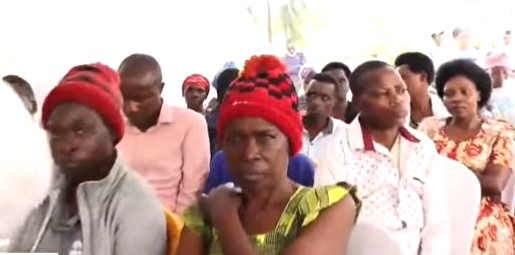
Patients are seated, waiting for their health insurance numbers to be registered, if it is renewed for the current year
However, this increase poses a major challenge: although the amounts may appear modest, they can be prohibitive for low-income populations. Research has already shown that even small premiums can constitute a barrier to healthcare access.
Structural Weaknesses and System Limitations
Chronic Financial Deficit
The system suffers from a structural imbalance between revenues and expenditures, with recurring deficits over several years. This results in:
- Increased reliance on public subsidies
- Growing fiscal pressure on the state
- Uncertainty regarding long-term sustainability
Insufficient Quality of Care
Despite broad coverage, service quality remains a critical issue:
- Delays in referrals to specialized hospitals
- Shortage of medical personnel
- Limited access to certain essential medicines
These shortcomings reduce the system’s overall effectiveness, even for insured individuals.
Persistent Inequalities
Although designed to be equitable, disparities persist:
- Poor households remain highly dependent on subsidies
- Access to specialized care is still limited
- Higher-quality private services are often unaffordable
Limited Coverage Scope in Certain Services
Another paradox is that, despite its central role, the system does not fully cover all healthcare needs:
- Medications in the private sector are not always reimbursed
- Certain specialized treatments require additional out-of-pocket payments
- Patients often bear indirect costs (transportation, time loss)
The government is considering reforms to improve access to medicines and expand coverage.
This highlights that the Mutuelle de Santé does not guarantee comprehensive coverage or optimal quality of care, thereby limiting its real impact.
Toward a Reassessment of Rwanda’s “Health Prestige”
Rwanda is frequently cited as a success story in public health across Africa. However, several factors are weakening this image:
- Financial dependence on the state and development partners
- Increasing financial contributions from citizens
- Persistent quality-of-care challenges
- Inequalities in access to specialized services
The system increasingly relies on a delicate balance between social equity and economic sustainability.
As a result, Rwanda’s reputation as a “champion of health for all” may be called into question if these challenges are not sustainably addressed.
Conclusion
Rwanda’s Mutuelle de Santé remains a major innovation in public health, enabling near-universal coverage and significantly improving access to care. However, scientific and statistical analysis reveals important limitations, including rising costs, financial deficits, insufficient quality of care, and persistent inequalities.
To preserve its status as a model, Rwanda will need to strengthen system governance, improve service quality, and ensure sustainable financing. Without such reforms, the system risks gradually losing both its effectiveness and its international prestige.
Byaruhanga Sam
(P.S.)
In Rwanda, the health coverage system is structured differently across socio-professional categories, with important medical implications in terms of equity and quality of care.
The Mutuelle de Santé, primarily serving rural and low-income populations, plays a crucial role in access to primary healthcare. It supports the management of common illnesses and promotes preventive care.
However, from a medical standpoint, it is often associated with a limited supply of services, including restricted availability of medicines, delays in referrals to specialized hospitals, and overcrowding in health centers.
In contrast, higher socio-economic groups benefit from private insurance schemes that provide faster access to specialized care, modern equipment, and better-resourced facilities. Military personnel also benefit from a separate healthcare system, often better organized and more responsive, with stronger continuity of care.
This segmentation creates a multi-tiered healthcare system in which medical outcomes may vary depending on the type of coverage. Patients under the Mutuelle de Santé may experience diagnostic or therapeutic delays, potentially worsening the progression of chronic or severe diseases.
Thus, while the system improves overall accessibility, it does not guarantee true equity in terms of quality and health outcomes.
The Mutuelle de Santé remains essential for improving access to healthcare, particularly for vulnerable populations. However, the recent increase in contributions—reaching up to 20,000 Rwandan francs—has raised serious concerns. This adjustment, sometimes based on inaccurate economic data regarding household conditions, risks further weakening already vulnerable groups.
From a public health perspective, this could lead to reduced healthcare utilization, worsening preventable diseases, and increasing medical complications. A health insurance scheme perceived as unaffordable risks losing both its credibility and protective function, potentially being viewed not as a solidarity mechanism but as an additional financial burden.
It is therefore crucial for policymakers to reassess pricing criteria and ensure the reliability of the data used. A more equitable and transparent approach would help restore public trust. Without such adjustments, the Mutuelle de Santé risks losing its social mission and undermining its effectiveness as a mechanism for financial risk protection against illness.
Alphonse